Almost 1,000 people were supported and homelessness crisis was prevented for 662 households in the first pilot scheme to test out how to deliver the upcoming ‘Ask and Act’ prevention duties, a newly published evaluation of the programme shows.
The Upstream Homelessness Prevention Fund learning report shares findings from seven social landlord and third sector partnerships who took part in the scheme – and estimates that activity in the pilots saved costs approaching £10million.
Partners used the £1million Scottish Government initiative to test, innovate and expand on tenancy sustainment work to find out what works and uncover barriers to success.
They reported that building trusted relationships and providing flexible and relational support were crucial to keeping tenants in their homes.
Routine ‘Asking’ at multiple touchpoints was effective as were rapid cash payments to address immediate problems – preventing evictions, reducing legal costs, building engagement and enabling frontline staff to quickly avert crisis for people.
Partners shared ‘One thing we would change tomorrow’ – covering themes including long-term funding, data sharing and support for frontline staff.
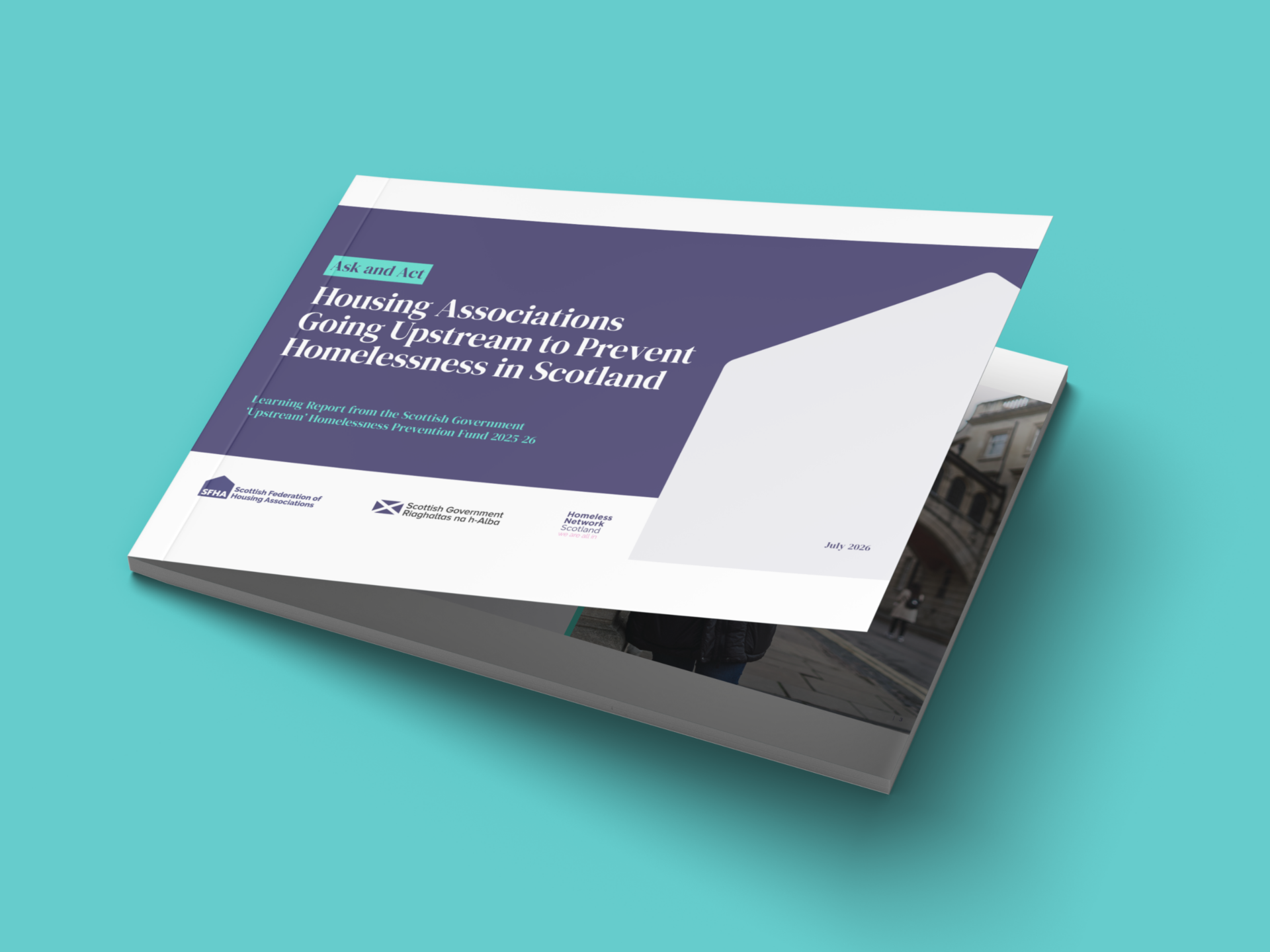
The report details the work done by the seven projects, with recommendations for social landlords, third sector providers, Scottish Government, public bodies who will deliver Ask and Act, and network organisations who will support implementation.
They highlight the power of effective multi-agency partnership working, relational and trauma-informed support, routine early ‘asking’ and adopting cash-first approaches.
The pilot ran from 2025-2026 with the scheme administered by the Scottish Federation of Housing Associations (SFHA) and Homeless Network Scotland (HNS).
The report was launched with an online event for members of SFHA and HNS attended by more than 100 people, who heard insights around data sharing, practical delivery, impact of cash first and future plans from projects who took part.
As part of a £50million package of homelessness prevention funding, the Scottish Government last week announced a £1million extension of the Upstream Fund, which will this time focus in on Glasgow.
This recognises the acute housing pressures in the city and also allows for exploration of learning on urban implementation, sustainability and cost-effectiveness of homelessness prevention measures.