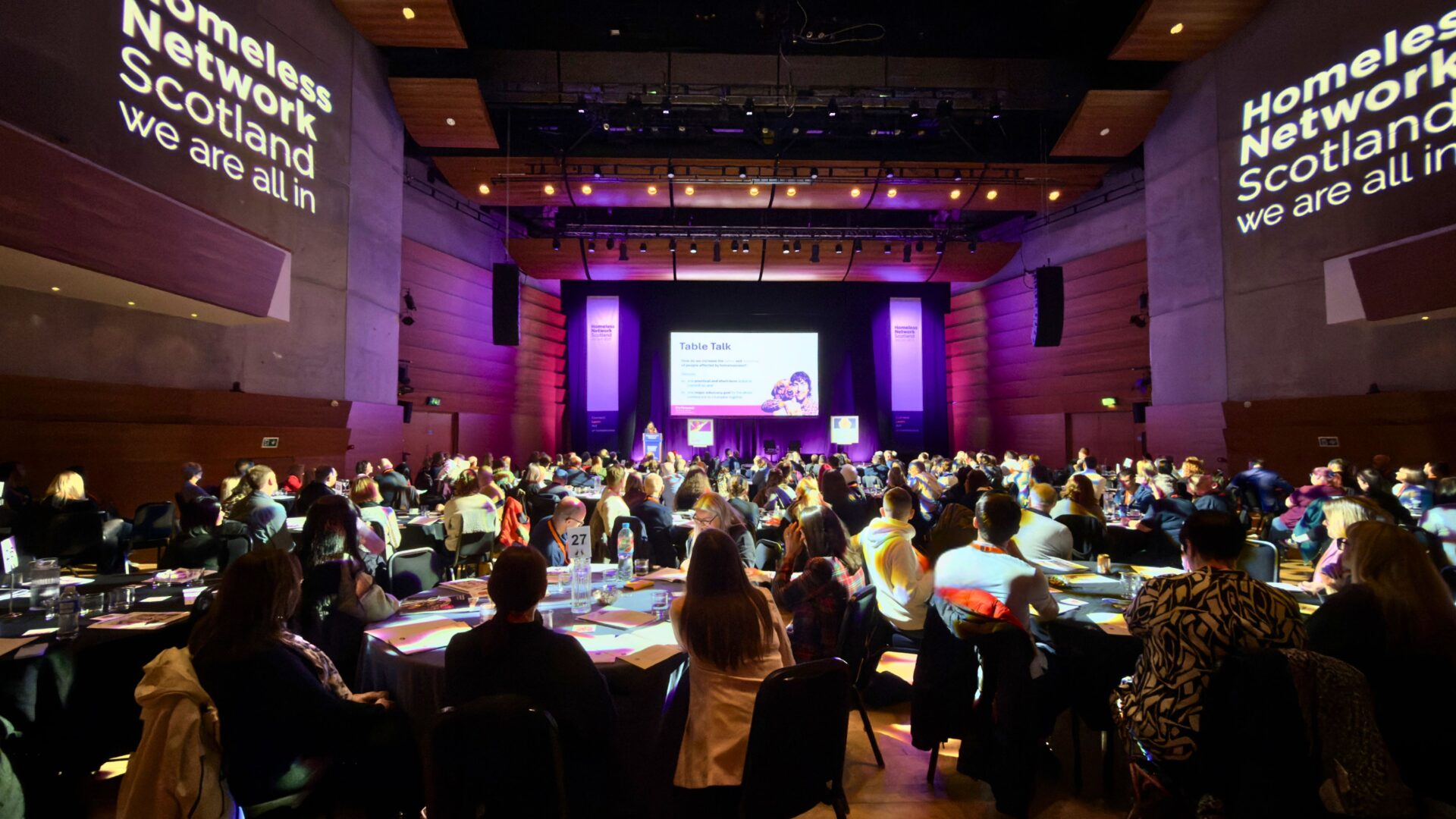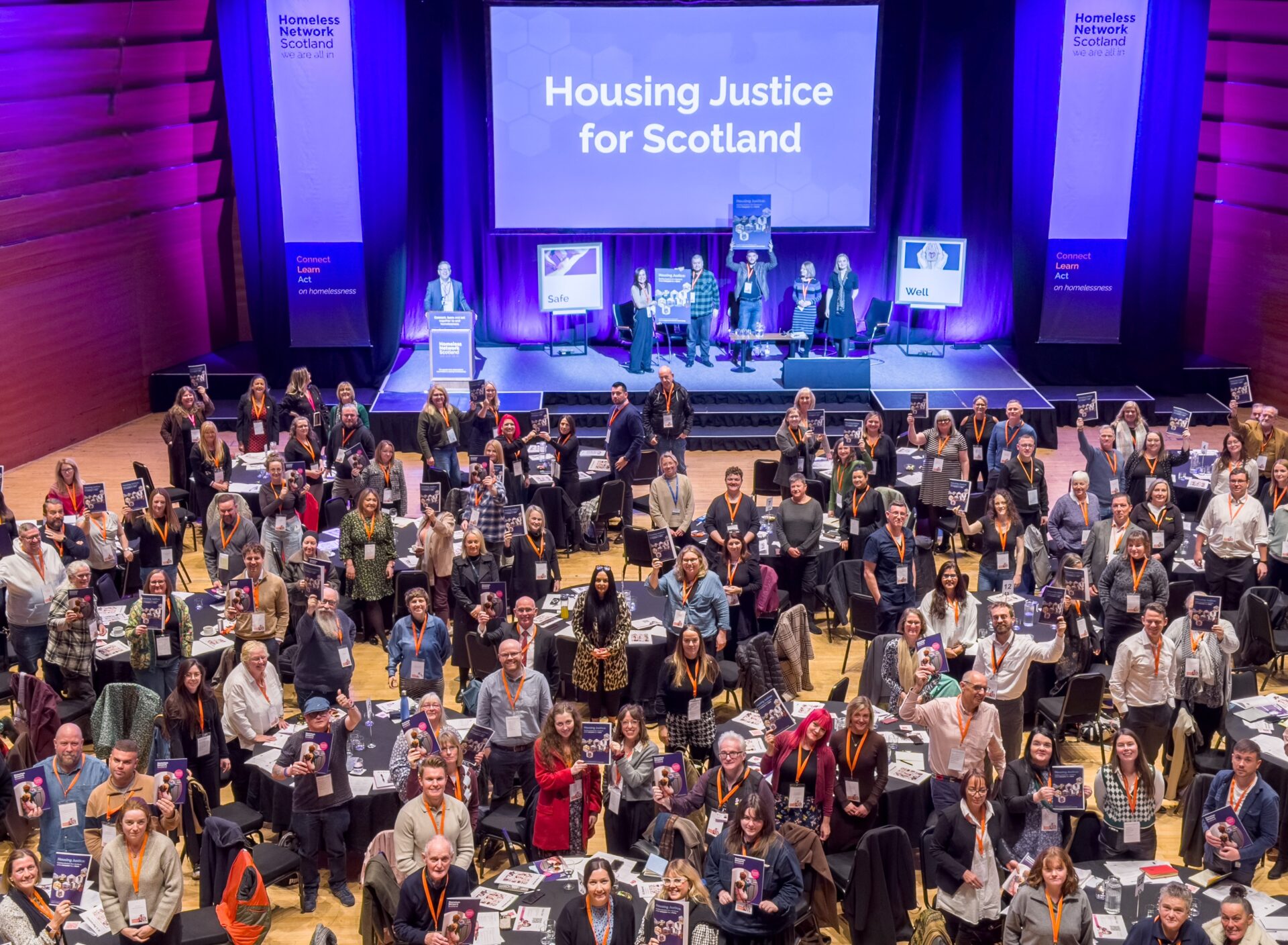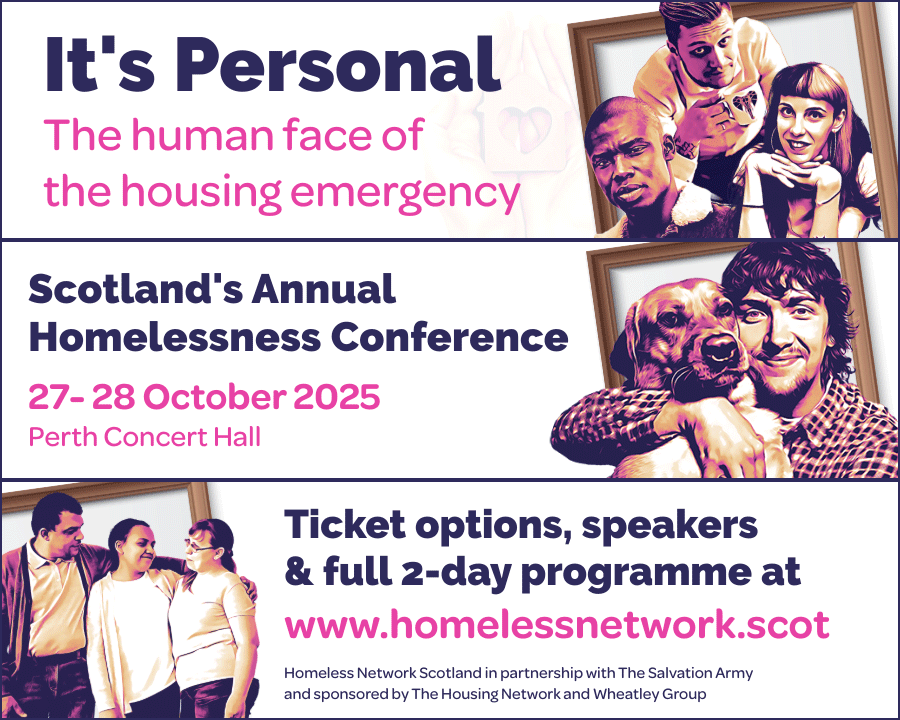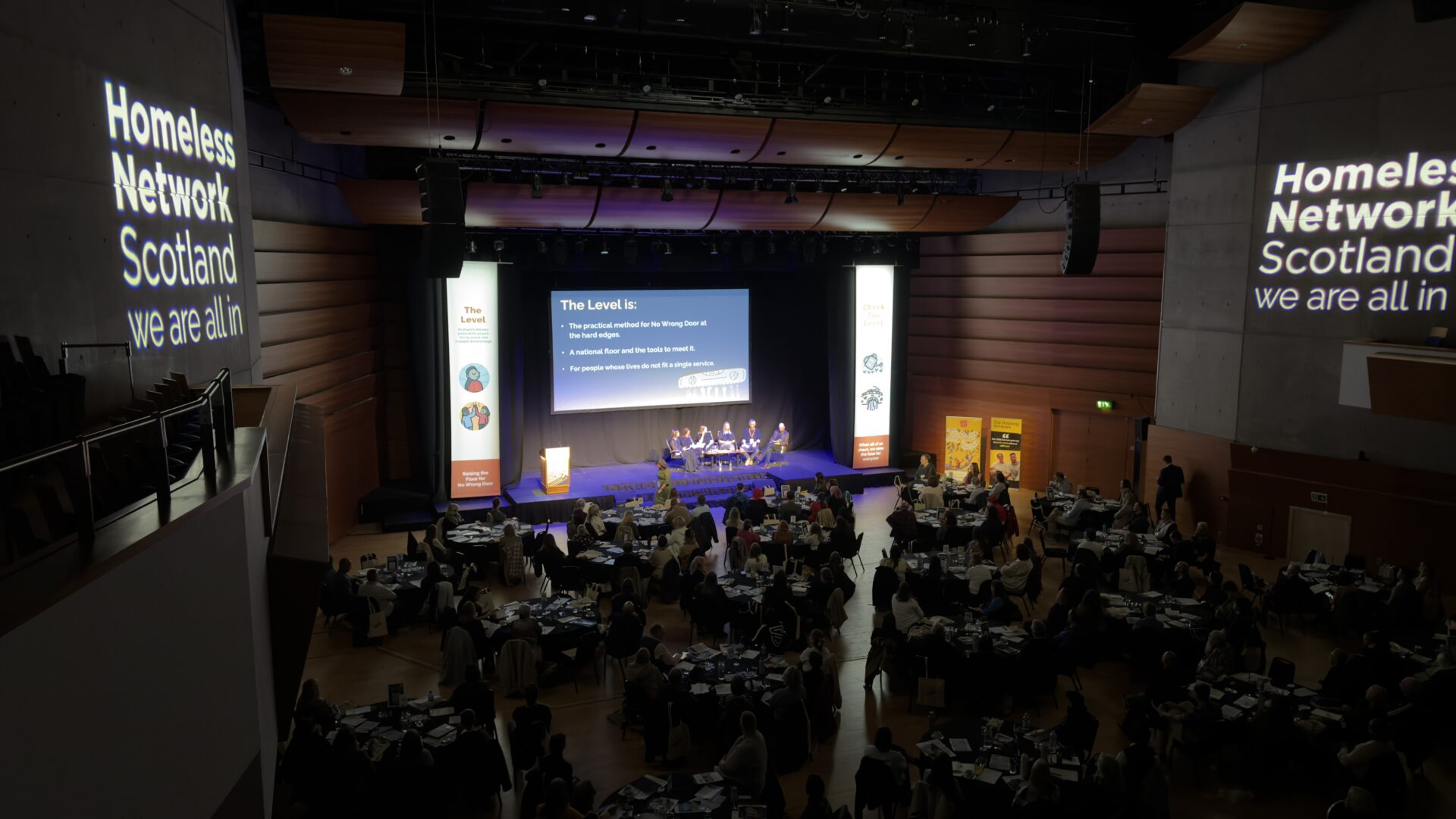
Raising the Level: from hard edges to whole lives shone a light on the hard edges of multiple disadvantage in Scotland to expose the human harm and economic cost of fragmented services – and plot how we fix the broken system that is failing people, communities and society.
The landmark two-day event in Perth brought into the fold leaders and voices from sectors including public health, mental health, drug and alcohol use, and criminal justice, recognising the whole system problem that needs urgent attention.
Before a word had been spoken the financial price of system failure made headlines, with the release of analysis by WPI Economics revealing the extra costs arising from a system that fails to address severe and multiple disadvantage – whose core issues are homelessness, offending and substance use – is an astronomical £5.8billion per year.
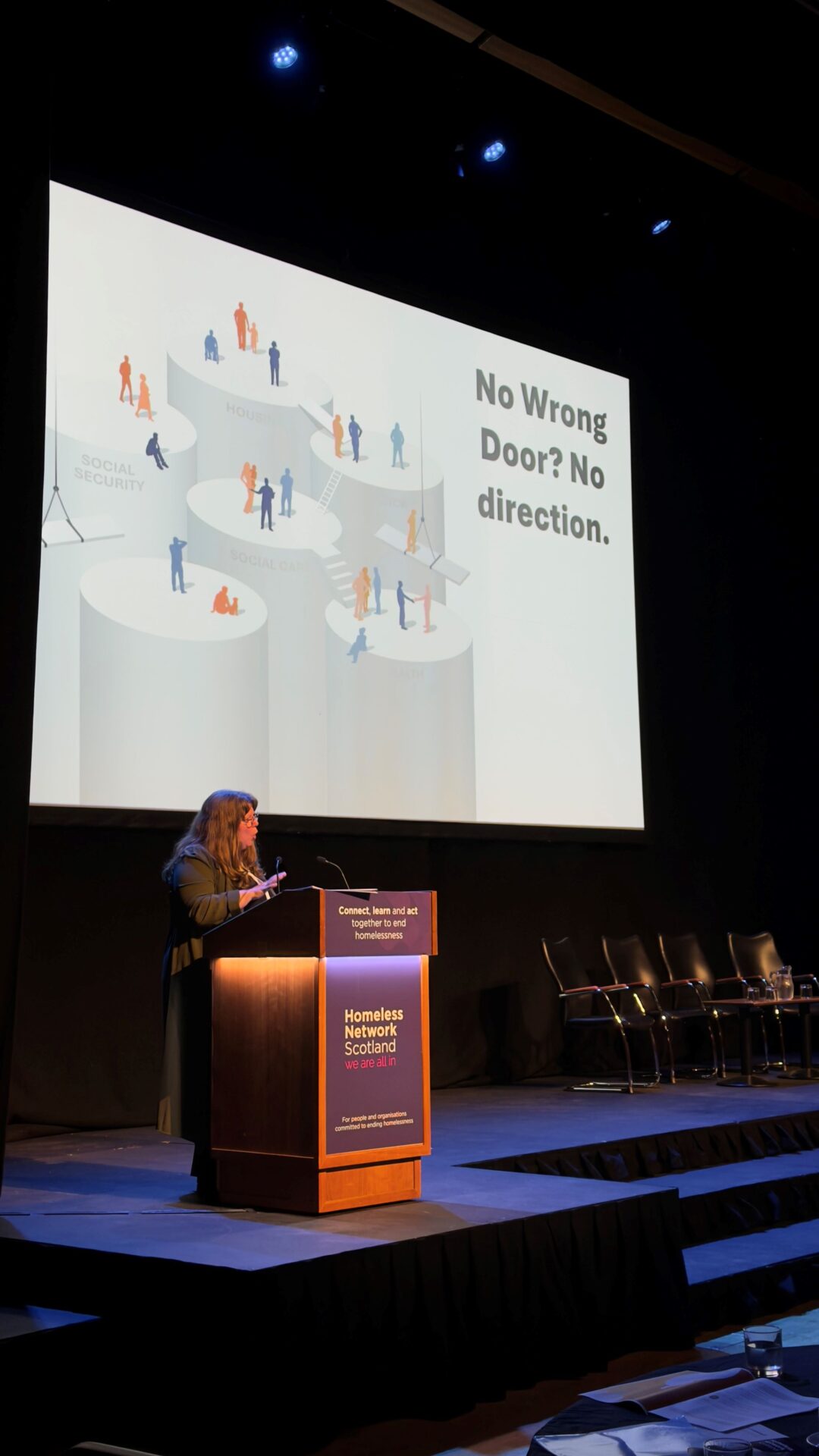
At a point in time where Scotland is big on prevention and ‘no wrong door’ policy but sluggish on implementation, Day 1 of the conference examined the role of the homelessness as the sector moves towards being part of an integrated system with wider responsibility for addressing crisis early and across a range of settings.
Day 2 was built around the launch of The Level, a new national protocol for providing better support for people with extreme disadvantage, making sure no one is turned away from help, left to navigate the system alone, or allowed to fall into service gaps – supported by more than 50 organisations. Read what supporters of The Level said following its launch. A full conference report is in the works, but here are a few highlights from the summit.
Keynotes and key moments
Homeless Network Scotland chief executive Maggie Brünjes set the scene with an opening keynote on a vision for a pioneering homelessness sector that refuses to operate in isolation. She said: “When homelessness services carry the can, a person can move through several services without anyone holding it all. When housing collapses, the homelessness sector is asked to respond as if the housing problem can be separate from everything that produced homelessness.”
Maggie asked delegates to consider what progress could be achieved if homelessness no longer held the consequences of system failure alone and set out the intention of the summit: to set The Level – minimum national standard of support – and move from an arrangement where one sector supports a whole life to a whole system response.
Prof Beth Watts-Cobbe from the Institute for Social Policy, Housing and Equalities Research at Heriot-Watt University (I-SHERE) showed us the reality on the ground when homelessness policy fails: households in unsuitable accommodation or unable to secure anything, people suffering harm in hostels or rough sleeping.
She set out why ineffective responses persist, putting it down to “Inertia, Interests and Ideas” – policy and resources locked in place, an unwillingness at times to change the status quo through self-interest, and well-intentioned ideas that focus on basic human needs while overlooking responses that offer dignity and effectiveness. The solution? Sort out the fundamentals – like housing supply – build stronger collaboration for change, and monitor outcomes more effectively to know what is working for people.
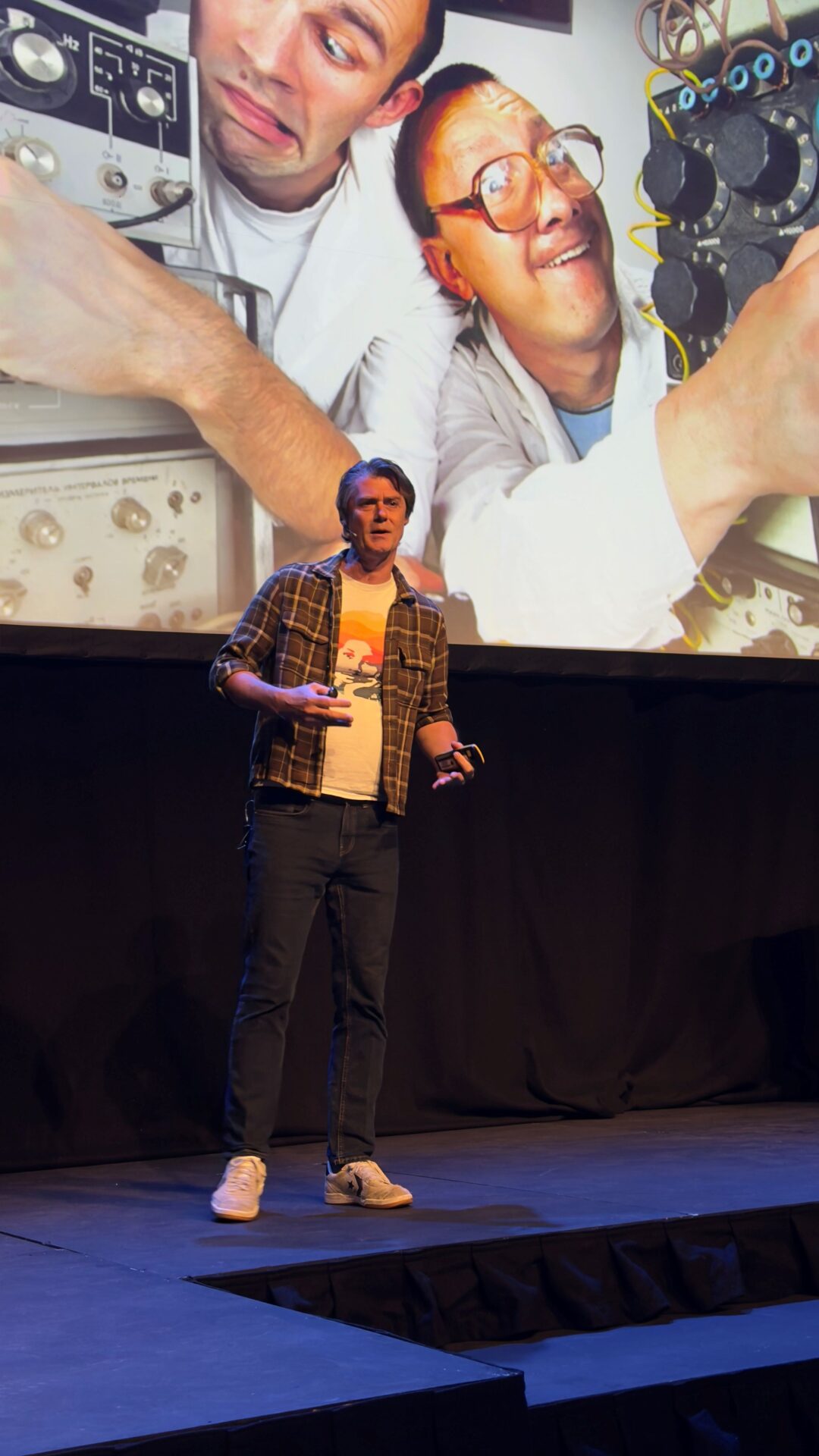
Mark Stevenson (the Reluctant Futurist) offered a unique and offbeat perspective on system change with a humorous and thought-provoking session that outlined the human flaws that can scupper how systems and innovations evolve, and the smarter thinking that gives rise to futureproofed and human-friendly ways of doing things.
Helen Murdoch from The Salvation Army and Josh Dumbrell of the Addiction Services and Research Centre at the University of Stirling showed us how nature-based activity is a meaningful part of ordinary support for men facing homelessness and problem substance use. Delegates learned about their research which shows how a whole system approach isn’t confined to indoor activity, with access to green space a powerful factor in recovery and human connection for people at the hard edges.
Homeless Network Scotland Associates brought the concept of good prevention to life with ‘Getting Ready for Ask and Act’ – a session featuring recordings of conversations between Associates who role-played scenarios to illustrate real life problems people experience and how they can be addressed early and effectively by asking the right question, in the right way, at the right moment.
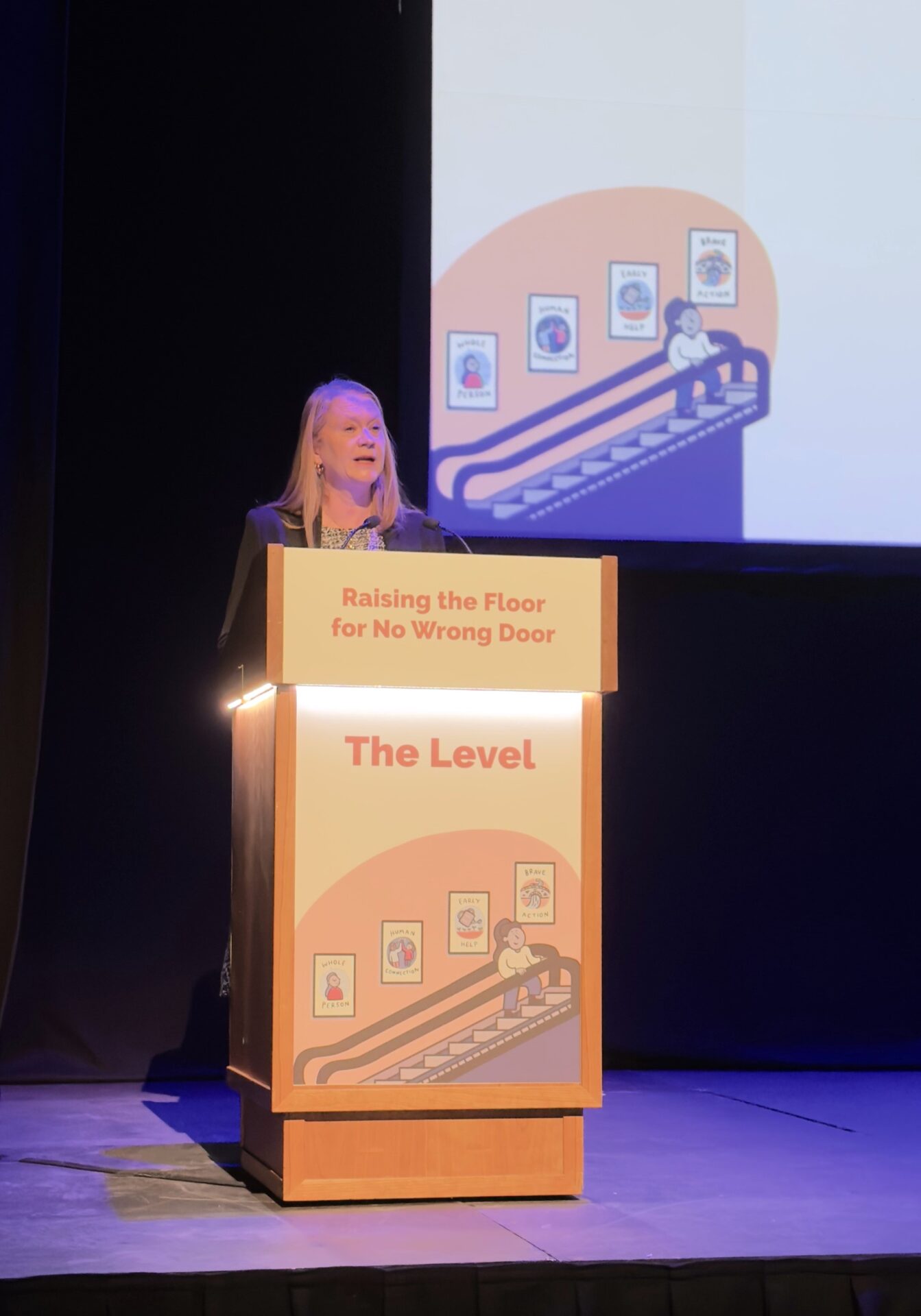
Cabinet Secretary for Social Justice and Housing Shirley-Anne Somerville began her keynote by offering her support for The Level, setting out how the protocol aligns with Scottish Government work on prevention and public service reform.
The Cabinet Secretary pointed to the key principles of prevention, person-centred support and joined-up systems, noting the success of the upstream homelessness prevention fund and adding: “We need to reach out to people before they reach crisis point” – especially to prevent people with multiple challenges having to navigate complex systems, repeating their stories.
She said success requires public bodies, frontline services, national and local government to work together and described the work of Homeless Network Scotland in bringing forward The Level as “an important opportunity for Scottish Government and other layers of government to be able to take that learning and actually make the change that you all know that we need.”
International speaker and harm reduction advocate Guy Felicella shared his life story with raw honesty and compassion – from teenage years characterised by violence and time spent in care, leading to drug use, gang violence, near death experiences and the pain of being stigmatised. Guy told us of his how he was brought back from the brink by simple human connection as well as ‘no wrong door’ support for his problems, leading him to his situation today where he is a father and husband, as well as a powerful and compelling advocate for harm reduction and relational support.
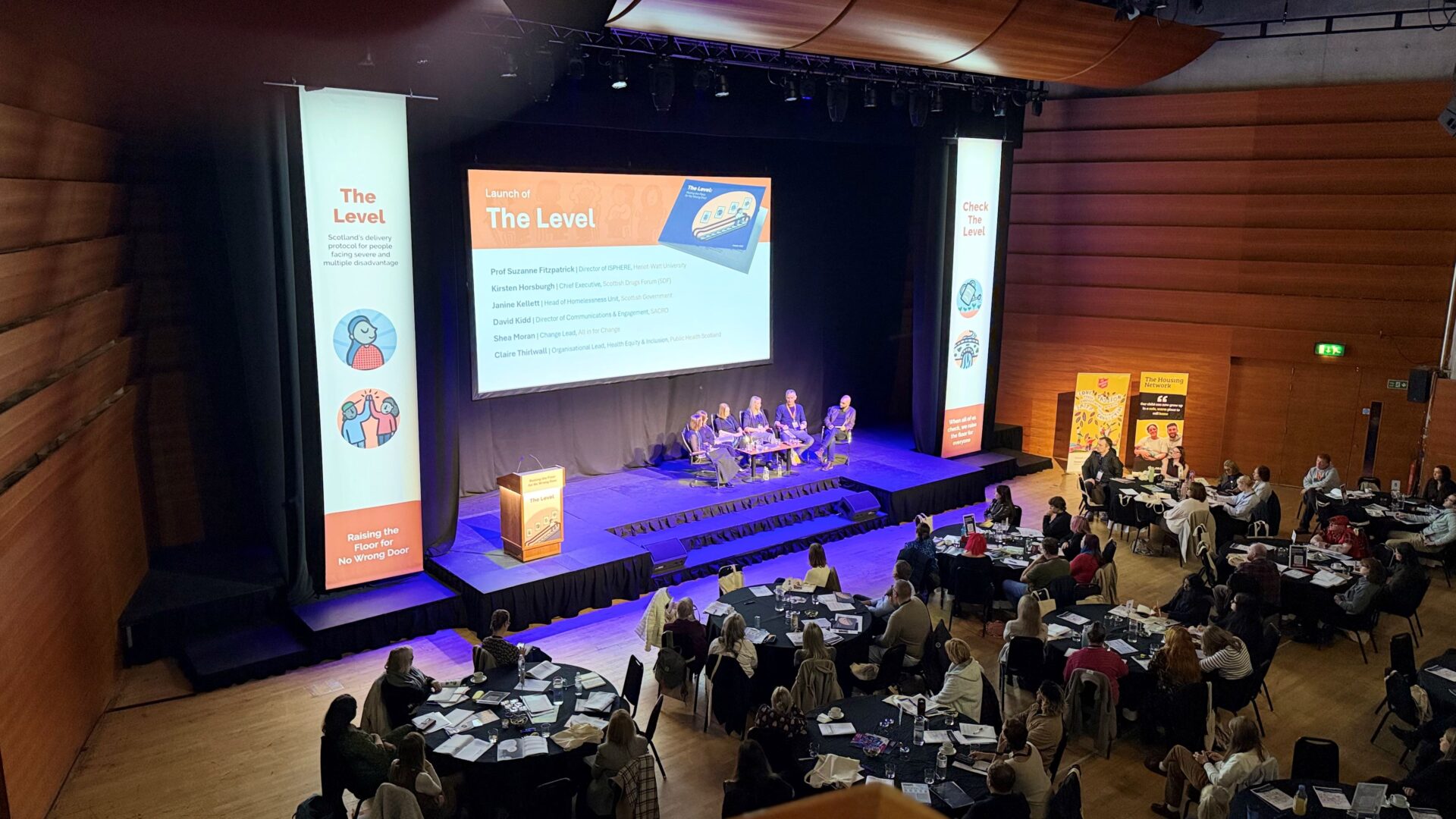
The Launch of The Level began with a simple ask for delegates to Check The Level. Panel host Shea Moran asked practitioners, funders, commissioners and policymakers in the audience to open the document and use the Level Checks to consider one action that stops disadvantage getting worse. The following discussion on implementation featured expert voices from public health, Scottish Government, criminal justice, and harm reduction to ask what successful implementation of The Level will look like in two years, and what needs to change to bring sustainable success. Key takeaways included giving local authorities the tools and resources to make The Level work for them, to reward good work done by services, and a warning that if we don’t change now, future generations will look back and ask why on earth we once delivered services in the way we do now.
Rob Fontana-Reval, Chief Economist with WPI Economics, guided delegates through the astonishing findings of economic research commissioned by Homeless Network Scotland to illustrate the financial cost of failure to support people with severe and multiple disadvantage, and the savings possible through a No Wrong Door approach. Along with the headline £5.8billion figure – based on conservative estimates and robust methodology – Rob broke down the ‘Silo Tax’. That includes £93million a year on NHS costs, £500million for homelessness services, £626million for criminal justice and more than £4billion wider economic and fiscal costs. Rob shared the flipside of the research, which illustrates how taking a more ‘no wrong door’ approach to supporting people could save around £380million a year – again, a cautious estimate.
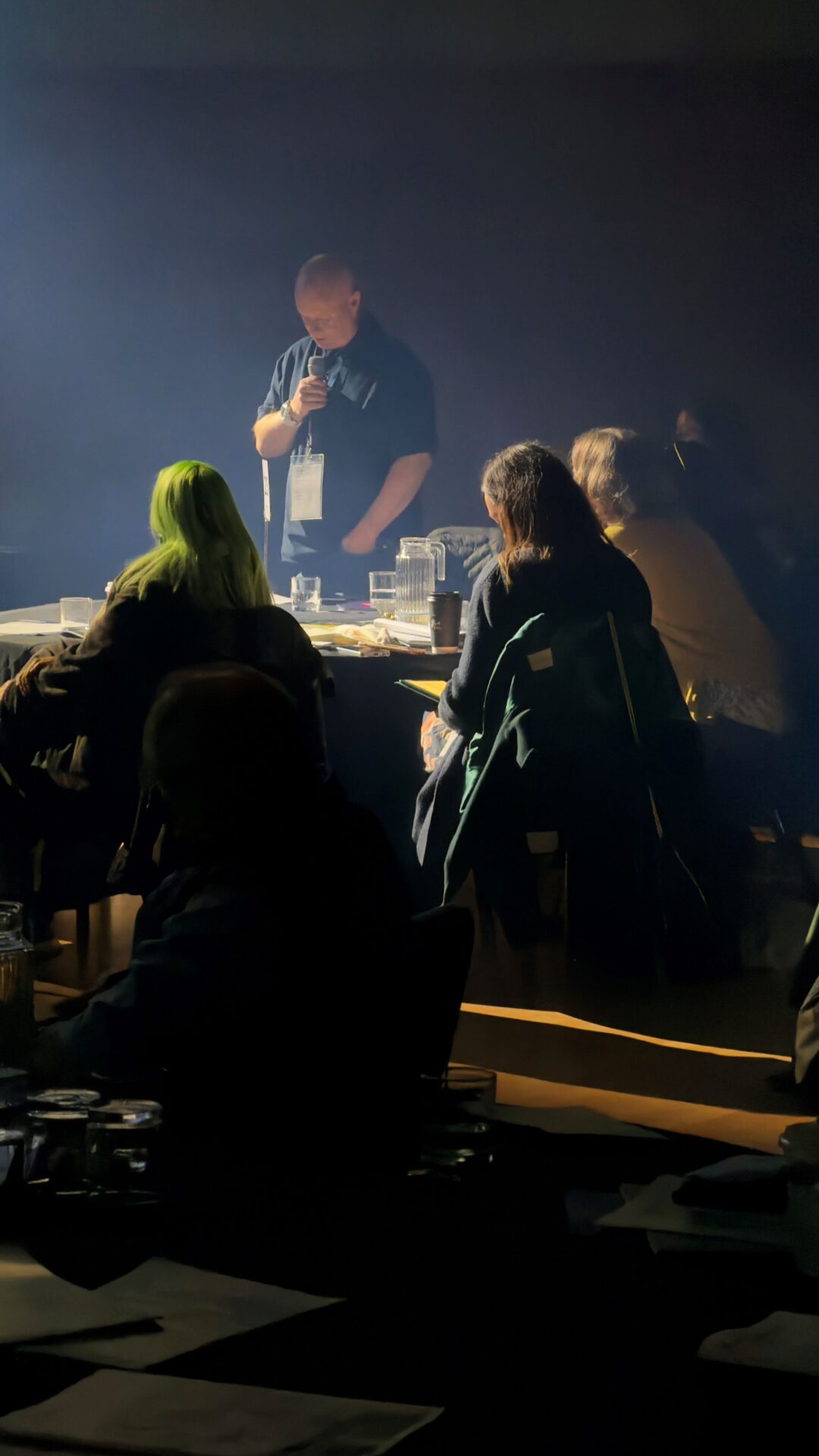
All in for Change delivered a spellbinding and atmospheric session to launch their new peer research ‘Nothing Lost in Transition’, which uncovers the ‘danger zone’ transition points where homelessness risk is predictable and preventable. These moments include growing up and moving out of home; leaving institutions; life experiences like bereavement and breakdown. With the lights dimmed, Change Leads in the audience were spotlighted to give voice to the stories they heard from people during their research.
Rachel Mackay, Chair of the Social Work Scotland Sub Committee for Contracts and Commissioning gave us insight into the critical role of commissioning in raising the floor for no wrong door. Rachel told us how The Level brings the ethical commissioning agenda to life. She also set out barriers to implementation like short-term funding arrangements and unstable systems, but shared the solutions that can win progress, including earlier planning to make prevention work.
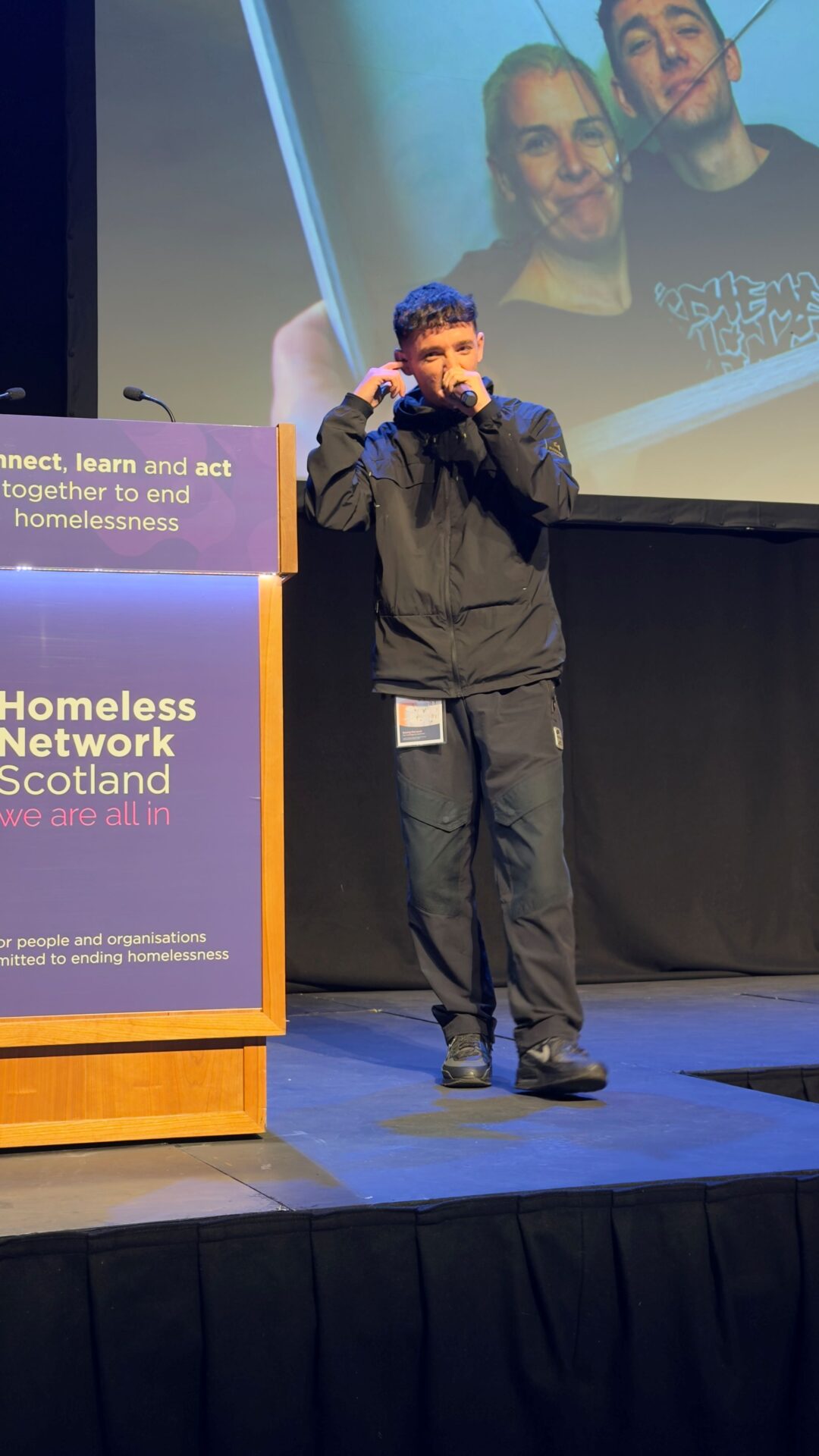
Along with the keynotes and sessions we enjoyed reflective and collaborative table discussions, 13 breakout sessions, music from socially-focused and charismatic hip-hop MC Jam Harvie to the Voices of Hope Choir, plus a networking dinner, the Frontline Awards videos and ceremony, exhibitions, short films and poetry.
The conference ended with an invitation for the full room to Check the Level by pledging to take one action that will move things forward. On the day we heard promises including to engage sector workforces to share The Level and take it forward, and all the responses will be collated for the full conference report to inspire widespread action.
Thank you to everyone who joined us in Perth – we hope you and left with a spring in your step and determination to Check the Level. And thanks to all our sponsors, exhibitors, breakout hosts and supporters. Raising the Level is over but work to raise the floor for no wrong door is just getting going.
Lookout for the full conference report and more on The Level over the weeks and months to come.