Blog: Ginny Cooper – No Wrong Door, better joined up working for those navigating a complex system

On Tuesday 26 July, representatives from across Scottish Government joined Homeless Network Scotland to discover and define what a practical, joined up system response should look like for people facing severe and multiple disadvantage – people having a really tough time. We were excited to meet colleagues from across the policy areas of homelessness, mental health, drugs policy, community justice, child poverty and The Promise – and are grateful for their time.

My role at Homeless Network Scotland focuses on systemic and cultural changes needed to end homelessness in Scotland. I believe that the systems which have been built to support people, whether that being when they are at risk of homelessness or experiencing mental health problems, are outdated and preventing people from thriving.

Looking at the evidence, Hard Edges Scotland (2019) explains the multiple needs for support of people living in deprivation, and new research from Glasgow University shows that homelessness, addiction, involvement in the criminal justice system and psychosis are linked to early and avoidable deaths. We know that one of the failing factors of the current system is the lack of communication and collaboration across systems and sectors, causing people using services to have to navigate a complex maze and repeat their story multiple times. We need a shift towards a more person-led system, across all public and voluntary support services, where joined up working allows for individuals to get the support they need and lead a life they value.

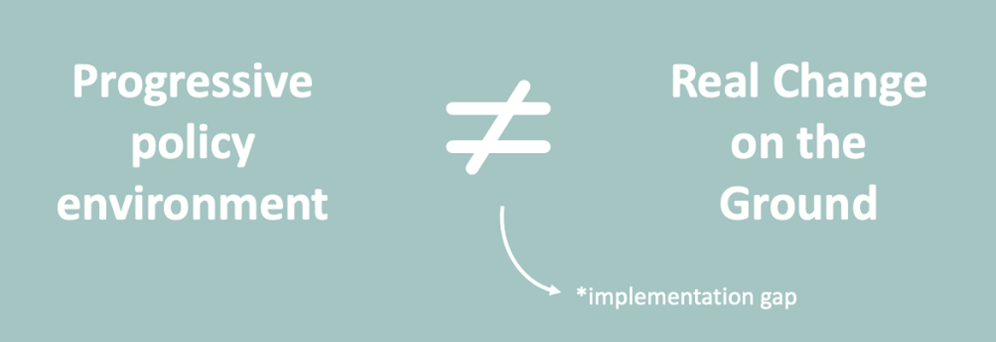
In Scotland, we have a progressive policy environment, but we are increasingly noticing an ‘implementation gap’, a discrepancy between the intention of great policy and the actual impact of that policy on the ground.
No Wrong Door is a new programme of work looking to explore practical and local solutions in how support services can achieve better joined up working across sectors.

There are 7 keys to No Wrong Door:

  • Preventative: Prevent adversity. Focus on early intervention and anticipatory forms of support that shift the emphasis from crisis response towards a better quality of life for people.
  • Coordinated Care: Rapid access to services, as directed by the person and supported/coached by a lead professional with the responsibility to coordinate joined-up services. End of passive referrals.
  • Person-led: People/families have choice and control and act on what matters most to them. Where services respond to that direction and build from people’s own strengths, capacities and successes.
  • Place-based: Valuing normality – home, community, relationships, recognition, love. Removing labels and centring ordinary activities in ordinary places – outside of services. Building local connections.
  • Trauma informed: Understanding the influence of past trauma on today’s decisions and interactions. The importance of safe environments and conversations, with support for practitioners too.
  • Equality competent: Moving beyond labels and symptoms, prioritising people and the root causes of tough times – poverty, inequality, trauma, relationships.
  • Learning Loop: Exploratory, action learning with feedback loop. Knowing more and taking corresponding, resolving action. Collective leadership – policy, academic, practice and lived experience.

By facilitating this discussion, we wanted to come together and discover where – what areas or places – there might be a shared appetite and energy to adopt a No Wrong Door approach. We discussed that for No Wrong Door to be successful we would have to take a slice through the system, identifying key stakeholders from housing and homelessness, social care, health and criminal justice. No Wrong Door needs to be led by the people who are directly involved in the services we are looking to shift, this means those delivering and using services as well as those designing and funding.
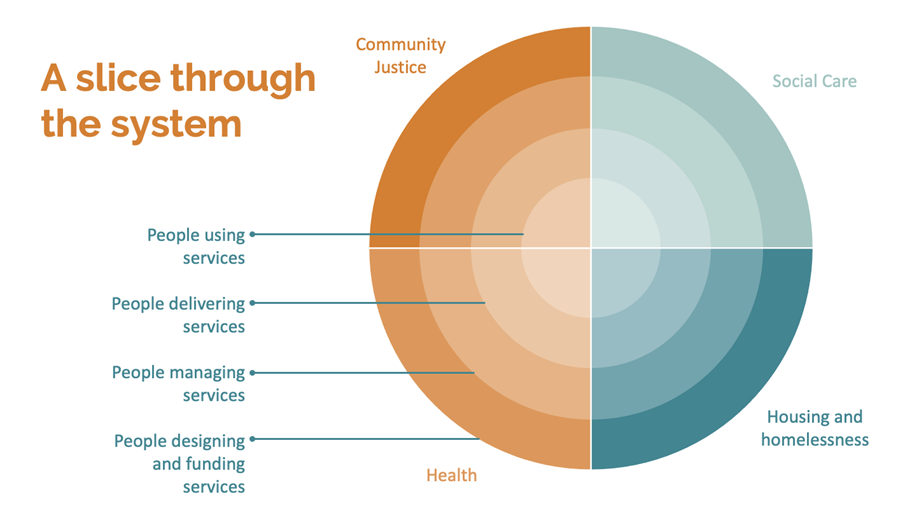
The values, capabilities and behaviours of people delivering services play a huge role in shifting a system. But, increased lack of resources and unhelpful bureaucracy has led to front line staff feeling deflated. By working with local communities No Wrong Door wants to connect people who understand what works well when providing support to those most at need, and what gets in the way. It wants to support them to work in collaboration to design solutions which work for everyone. To do this we are looking to work with two pilot areas and take people through a collaborative change process which includes building:

  • Awareness: People understand how, and have the permission to do things differently
  • Desire: People want, and feel able to do things differently
  • Knowledge: People know how to do things differently
  • Ability: People have the means and support needed to do things differently

It was clear that the Scottish Government colleagues get this – we know that many of the most progressive voices are already within the public sector and in pivotal roles. But we need help to create a learning system between the local and the national – and to work ambitiously outside of traditional sectors, silos, systems and services in a way that fully puts people first. Next steps will include pinning down our two test-of-change areas and having further conversations to decide what support is needed from Scottish Government to help create the conditions for No Wrong Door to succeed.

To find out more or to get involved – contact Ginny@homelessnetwork.scot.

Winter vaccination programme for people experiencing homelessness 

Public Health Scotland selected organisations to take part in an explorative session on the 21st of July 2022. Derek Holliday, Involvement Lead with Homeless Network Scotland, provides an outline of the session.

Last week Public Health Scotland held an event with housing and homelessness organisations to consult on how to support Health Boards to plan for the autumn/winter Covid-19 and flu vaccination programme. At the heart of this work was the drive to encourage better uptake among specific groups, including people experiencing homelessness and rough sleeping, by learning from their previous experiences and barriers to uptake.

Session aims were to:

  • Support Health Boards plan for the Autumn/Winter Covid-19 and Flu inclusive vaccination programme.
  • Capture the experiences and opinions from front line organisations and services that work with people experiencing homelessness and rough sleeping.
  • Learn more from target groups, where vaccine uptake has been lower.
  • Support Health Boards to explore inequalities issues and discuss practical responses.

The group worked through a number of topics identified within Health Boards’ vaccinations strategies, relating to people experiencing homelessness and rough sleeping, including:

  • Working collaboratively
  • Outreach work
  • Mass vaccination centres/clinics
  • Communications

And focused on the following questions:

  • What worked well/not so well during lockdown to increase uptake of vaccinations?
  • Any new ways of working to consider as a result of this learning?

Suggestions shared for improving uptake:

  • Outreach and trusted relationships have been identified as the ‘best working’ model for encouraging vaccine uptake and flu jabs in communities with those experience homelessness or rough sleeping alongside complex unmet health needs.
  • Mass vaccination centres and reminder letters do not encourage vaccine uptake within the community, a person-centred approach through trusted relationships and place-based approach is the best working model.
  • Better coordinated communications were needed from Public Health Scotland to the 3rd sector/voluntary organisations, especially around vaccine resources in other languages and alternative formats.
  • https://www.publichealthscotland.scot/our-areas-of-work/covid-19/covid-19-vaccinations/covid-19-vaccine-information-and-resources/support-for-specific-groups-and-communities/ – specific groups and communities’ resources
  • https://www.publichealthscotland.scot/our-areas-of-work/covid-19/covid-19-vaccinations/covid-19-vaccine-information-and-resources/vaccine-resources-in-other-languages-and-alternative-formats/ – vaccine resources in alternative languages.
  • The group agreed that there were inefficiencies with the Patient Transport Services which did not meet the desired hope during the lock down. The group agreed that there may be better outcomes from supporting community organisations to deliver this service.
  • A centralised hub for accessible information for organisations supporting those experiencing homelessness/rough sleeping, especially around access to interpreters.
  • Taking advantage of opportunities to have a positive intervention as they arise, being better placed to take advantage of ‘will’ and not allow system made barriers.
  • Buy-in and agreement from Health Boards and Public Health Scotland in relation to vaccine waste, a vaccination bottle of Pfizer can only be transported once and only opened if all 10 persons are booked in to use all the vaccine dosages per bottle. However, Astra Zeneca was able to be transported multiple times and this allow Public Health Scotland runners to ensure no vaccine dosage was lost and allowed health workers to respond to the ‘will’ and opportunistic vaccine request from those experiencing homelessness and rough sleeping.
  • Hunter Street had great success in accessing over 50 Homeless service sites, being able to access the Turas System made the difference, the ability to see who had been vaccinated and to be able to update the system created great efficiencies and collaborative working.
  • Through the same framework, Hunter Street have vaccinated of 250 individuals with flu doses, delivering double the flu vaccines than any previous campaigns.
  • More pharmaceutical collaboration with city street teams to support community vaccine outreach, this was highlighted as an incredible bold model that allowed health needs to be identified and supported especially around those experiencing rough sleeping who often do not access mainstream services.
  • Vaccinations administered through assertive outreach in hostel accommodation and supported accommodation was rated as a great success

Next steps

The write-up, conclusions and recommendations from the session are being firmed up by Public Health Scotland in collaboration with those at the session. Once finalised, Public Health Scotland will share the findings with the 8 Health Boards across Scotland.

Learning from European Peers

by Michelle Major, Homeless Network Scotland

The Housing First Europe Hub can help organisations, governments, housing providers, and professionals to organize information sessions and training for a wide range of audiences. Within this offer is the annual education programme for Housing First trainers, designed for trainers who want to specialise in Housing First training. The goal is to create a European pool of trainers who are knowledgeable and experienced in Housing First, who are able to design and lead a variety of training modules on aspects of Housing First in countries across Europe and beyond.

I was fortunate to claim a place on the programme, now entering its fourth year, and work with trainers from a number of European countries in three beautiful locations – Berlin, Bologna and Budapest. As well as learning from the trainers and the other participants, we have had the opportunity to learn from teams delivering Housing First in each city.

In Berlin, Housing First is delivered by Neue Chance, and they shared with the group how valuable peer workers are in their context. Rather than having peers deliver Housing First support, Neue Chance employ peer workers as maintenance staff. If there is something to be fixed in a property, the tenant knows that the person coming to do a repair has shared a similar experience and will not cast judgement on their home.

In Bologna, Piazza Grande delivers Housing First and have placed real importance on the interior design of each property that Housing First tenants live in. They talk about “beauty in Housing First” with Housing First tenants working with an interior designer to improve the property and design a space in line with the tenant’s desires. Piazza Grande have found that input from the interior designer motivates tenants to look after their home more than they have in the past. The team from Piazza Grande also sparked an interesting discussion on sexuality and Housing First – for many people this is their first time having a home of their own in a long time, having a private space to express themselves and unlock their sexuality in ways that are just not possible in emergency accommodation or dormitory-style accommodation.

It has been an eye opener to spend time with people working towards the same goal using the same method to end homelessness but all in very different contexts. Often within the group people will say that Scotland and Finland are the closest to achieving the goal of ending homelessness and this is so inspiring, but so is all the learning from other countries. People are working so hard to circumvent difficult policy landscapes and in Scotland we are so lucky to have such strong legislation and policy around homelessness, maybe the time is coming to broaden our thinking, consider the successes from Berlin and Bologna and how they could be implemented in a Scottish context.

The group will come together again in Budapest in October, and I’m sure there will be yet more fascinating discussions and lessons learned that will help us in Scotland to upscale Housing First and deliver an even better, stronger approach to ending homelessness with ordinary homes and excellent support for those who have faced the most challenges in our society.

Back to Reality!


After just over a year off on maternity leave raising a very special little girl (I am biased I know!) I am so pleased to be back at work, juggling a new set of responsibilities and challenges. Before returning in April I felt anxious about what the reality of work would be now, especially since I had left the office at the start of lockdown and hadn’t returned. I was thrilled to be back in, around my colleagues and even more excited to be back for the first “in person” Change Team Retreat since 2020.

That the Change Team has continued to function since lockdown, when they were only in their infancy as a team, is a credit to the determination and commitment of the members themselves. When we all had Zoom fatigue, they continued to come together and work tirelessly on ensuring the changes outlined in the Ending Homelessness Together plan were reaching those who are most affected by homelessness – the people who are experiencing it and the frontline workers who support them. The Change Team have made huge contributions to policy and practice throughout lockdown, including contributing to the Everyone Home Collective, holding a National Conversation consultation exercise and feeding into many external consultations. On top of this, they have been working on their own priorities for change and taking platforms at conferences and webinars to share their message.
On the 20th of April in Arnotdale House we were finally able to bring the Team together in person again. For some, it was a welcome return to a serene venue and for newer members it was their first visit and first time meeting their fellow Change Leads in real life. I know I was a bit nervous and I’ve done this plenty of times before so I can only imagine how our new Change Leads felt on their journey.

From the moment the first Change Lead arrived there was a buzz in the air. The atmosphere was amazing, and enthusiasm was palpable. The day was filled with introductions, ice breakers and activities to allow us all to get to know each other better and feel as comfortable as possible, creating the ideal Team dynamic for what we know will be a really successful and productive year for the All in for Change programme.

To set us up for success, the Team have voted on the priorities to focus on over the coming year at our monthly Retreats, where we will invite experts in each field to share knowledge and answer questions. Growing our own knowledge and sharing our own expertise will stand the Team in good stead for another busy year of influencing change.

Our areas for focus for the year’s retreats are:

  • Flexible and person-centred support
  • Youth homelessness
  • Ending stigma connected to drug use
  • Support for people in tenancies
  • Holding tenancies for people serving short term sentences
  • Health and wellbeing
  • Raise awareness of social justice issues

Each of the priorities fit under one of our 4 New Directions, People First, At Home, No Wrong Door and Good Vibes.

If your organisation has expert knowledge or specialist experience in any of the issues listed and would be interested in sharing your expertise with the Change Team, please get in touch at changeteam@homelessnetwork.scot and we will get you involved.

Watch this space, as I think this could be our most impactful year yet!

Reflections from Claire Frew 

How much change can happen in almost eighteen years?  I’ve been thinking about that a lot during my final few days working at Homeless Network Scotland. 2004, when I first joined the organisation, seems like a long time ago. Which of course it is. Clearing out my desk got me thinking about what has changed and, equally interestingly, what hasn’t. 

A couple of obvious things come to mind. 

In 2004 the Homelessness Task Force had not long completed its work, making a series of recommendations, many of them focused on changing the legal framework for homelessness. And for a while it felt like the sector was collectively working towards the shared priority of removing the priority need test from homelessness legislation. Wherever you were and whoever you were speaking with, the ‘2012 target’ was central to almost every conversation. Looking back, it was probably the greatest level of momentum and collective ownership I’ve experienced. And we’ll certainly need that again if Scotland is not only to create new legal duties to prevent homelessness, but to truly make them a reality for everyone who may need the extra protections.

It’s also interesting to look back on the evolution of Housing First in Scotland. From those early conversations in 2009 when very few people had heard of the model, to the position we find ourselves in 2022 where three-quarters of local authorities are delivering Housing First and over 1,000 people are benefitting from the housing and support they need. It’s a nice reminder that change does happen. But also a reminder that change can be slow and takes a considerable effort from so many people just to inch forward. And when thinking about how much is still ahead of us before Housing First truly becomes the default offer for those who need it, that sense of momentum and collective ownership will be needed here too.

It’s been a pleasure to be part of a small team working hard to change the way we think about and respond to homelessness in Scotland. I know my colleagues at Homeless Network Scotland will continue to do this alongside the rest of the sector and I look forward to seeing what they achieve next.

If I leave with any reflection, it would simply be this: always remember why you do what you do, celebrate progress along the way, and don’t lose patience as you’ll need it for the long haul.