GHIFT’s key role in designing new WAYfinder service

A new unified model of support for people experiencing homelessness in Glasgow launches today – shaped by the expertise and priorities of people who’ve been there.

The blueprint for the new WAYfinder service was co-designed by Glasgow Homelessness Involvement & Feedback Team (GHIFT) a team of Homeless Network Scotland Associates with direct experience of homelessness, working alongside service providers and commissioners from Glasgow City Health and Social Care Partnership (GCHSCP).

The design process took place across five sessions hosted by Homeless Network Scotland last year as part of a collaboration called All in for Glasgow.

GHIFT members used their experiences of accessing support in the city to shape the principles and focus of the service and add fine detail on how it would work best on the ground. Leading homelessness charities from across the city shared their expertise and insights – and their aspirations for transformative services.

The name stems from team member James Stampfer’s insight that good quality relational support starts with a worker asking “Who Are You?”– emphasising the importance of understanding each person’s strengths and their journey.

The All in for Glasgow sessions examined how to join up community services, public services and specialist support services commissioned by GCHSCP for people navigating homelessness. The ambition is to ensure the right services at the right time, where people have maximum choice and control toward a life beyond services.
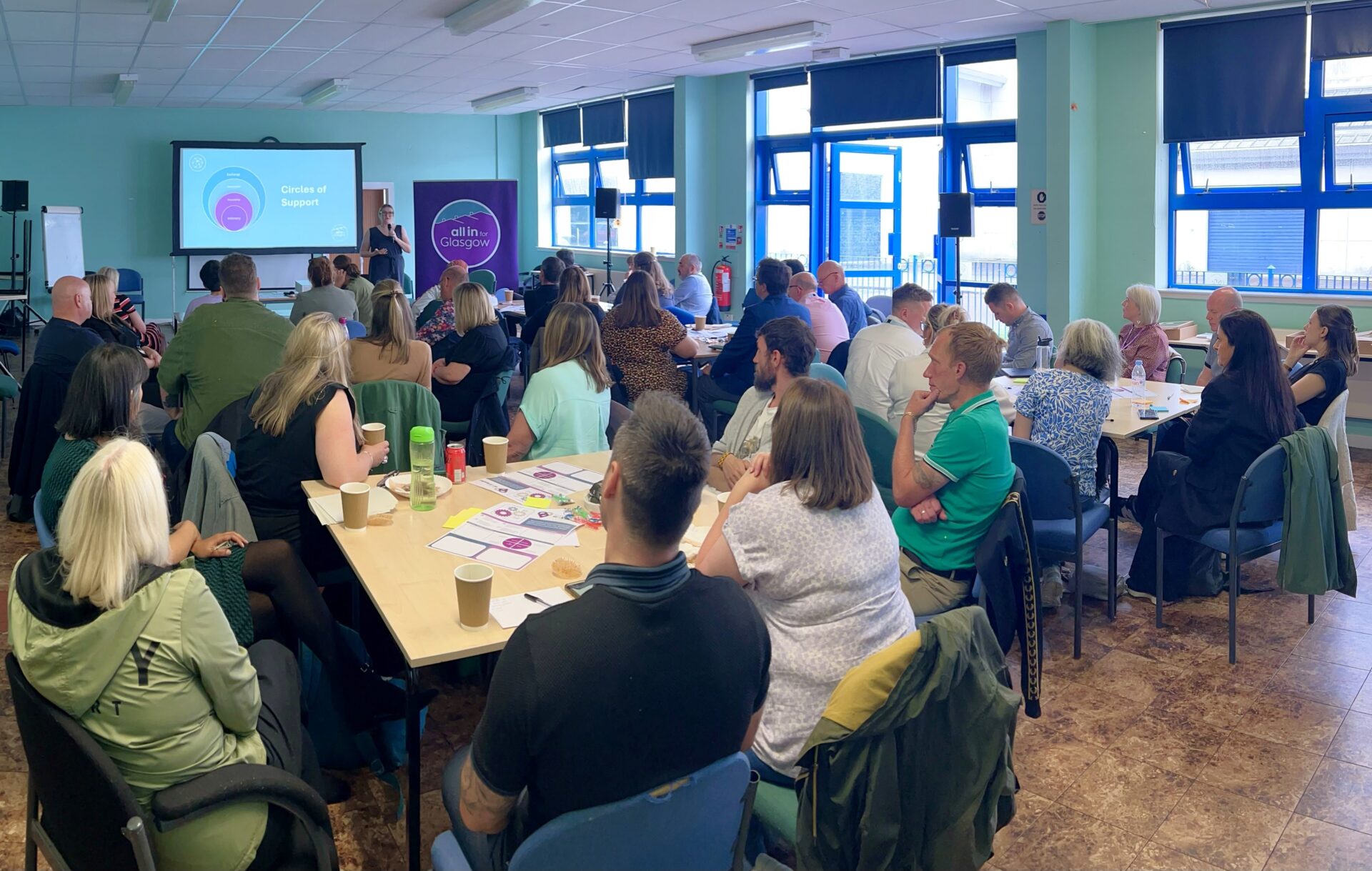
WAYfinder is designed to provide joined-up support so people don’t have to tell their stories repeatedly to get support from different parts of the system. A service model that works to combat the harmful effects on people of homelessness and reduce exclusion of marginalised groups were also identified as priorities by GHIFT.

GHIFT members have welcomed the start of the new services. Martin Boyle said: “I hope WAYfinder does what the name says, by providing a seamless approach to support for people to navigate the system with a worker alongside them. I want people to feel supported through their journey and have someone who sticks with them.

“It’s a great thing because it emphasises supporting people in communities rather than traditional ways of support. It’s a totally new way of support having organisations working together and connecting people in with their communities.”

Jeremy Wylie added: “I enjoyed having the level of responsibility GHIFT held throughout the process, especially when we evaluated the submissions. I felt like we were really an equal part of something and made an important contribution for a cause that we all believe in.”

Glasgow City Health and Social Care Partnership said: “Teams across the HSCP, in conjunction with people with lived experience of homelessness, have been working to develop a new service, WAYfinder, to deliver outreach services for people experiencing homelessness, which starts today.

“The HSCP thanks Homeless Network Scotland and the Associates from the Glasgow Homelessness Involvement Feedback Team for their work in developing the new service and looks forward to working with the WAYfinder partner providers in this important step in our efforts to help people find their way into settled, sustainable and secure housing.”

Today marks a day when the GHIFT team once again show the depth of their individual expertise and collective commitment, and the irreplaceable value of working with people who really know what homelessness looks and feels like.

Read the Glasgow City HSCP announcement.

Breaking down barriers to support for people at the hard edges will create a more equal Scotland

No Wrong Door Scotland partnership launched to create a blueprint for joined-up services that address multiple disadvantage

A major new test of change has been launched to explore how to break down barriers to support faced by tens of thousands of people in Scotland who face multiple disadvantages – with their experience made worse by unequal access to help. 

No Wrong Door Scotland will draw on a wide range of professional, academic and lived experience to explore how to better serve people who are dealing simultaneously with issues such as homelessness, poverty, addiction, offending and mental ill health. 

Experts in the action learning partnership will address the mismatch of services that focus on a single issue and the overlapping challenges many people face – often as a result of adverse life experiences going back to childhood. 

This fragmented model forces people to repeat their story and often relive traumatic events when they go round the different ‘doors’ in the system in search of help. 

A National Learning Set of experts who will oversee and contribute to the programme met for the first time in Edinburgh on Monday 16 September. 

The two-year programme will wrap a learning cycle around existing services at local level to understand how to deliver No Wrong Door in different geographical and service contexts.  

Evidence gathered from the services run by Aberdeen Foyer, Cyrenians, Penumbra and Turning Point Scotland will feed into the National Learning Set, who will develop a National Framework for creating cross-sector and integrated service delivery. 

They will share evidence gathered from the test-of-change with the Scottish Government’s Ministerial Oversight Group on Homelessness, to influence a new model of service design. Homeless Network Scotland is the learning partner in No Wrong Door Scotland. 

No Wrong Door Scotland is made up of third sector innovators, lived experience experts, policy makers and leading public figures. They include former Scottish Labour leader Kezia Dugdale, now associate director at the Centre for Public Policy at the University of Glasgow; Karyn McCluskey, who helped create the groundbreaking Violence Reduction Unit and is now chief executive of Community Justice Scotland; and leading international scholar on homelessness Professor Suzanne Fitzpatrick. 

The partnership builds on findings in the Hard Edges Scotland research co-authored by Prof Fitzpatrick, director of Heriot-Watt University’s Institute for Social Policy, Housing and Equalities Research (I-SPHERE). 

That report set out how people who have suffered experiences such as trauma, violence and poverty are much more likely to face multiple and overlapping disadvantage.

But they are also less likely to be able to get the support they need because of services operating in ‘silos’ – fuelling a vicious cycle of disadvantage and inequality.

The Hard Edges research revealed that 5,700 adults experience three ‘core’ forms of severe and multiple disadvantage (homelessness, offending and substance dependency), while 28,800 experience two out of these three.

The four test-of-change services are based in Aberdeen, Dundee, Edinburgh and Fife

Aberdeen Foyer’s service focuses on upstream work in schools to ensure young people don’t face barriers to support, while Cyrenians’ Hospital In-reach Service supports patients who are at risk of or experiencing homelessness.

Penumbra’s Hope Point is a 24-hour wellbeing centre that supports people in emotional distress. Turning Point Scotland’s Fife Support Service marries a Housing First model with an innovative Whole System Approach to prevent and respond to homelessness.

Maggie Brunjes, chief executive of Homeless Network Scotland said: “It is well established that the way services are paid for and provided does not work for people who, on top of traumatic life experiences, are also dealing with issues including physical and mental ill health, substance use, homelessness, poverty and offending. 

“The current model doesn’t work for anyone. It makes navigating the system difficult for people, it widens disadvantage and inequality, makes key workers’ jobs harder and it mounts pressure on public spend. 

“The Scottish Government is already committed to using a No Wrong Door approach across a range of social policy, but we need a shared definition of what this looks like and a national framework to inspire local and national action.  

“By using evidence of what is working locally, and what needs to change, we can firmly challenge the status quo and demonstrate that a better way is possible.” 

➡ For more information, visit nowrongdoor.scot.

Homelessness guidance films for health staff

More effort and targeted approaches are often needed to ensure health and social care for people experiencing homelessness is available, accessible, and provided to the same standards and quality enjoyed by everyone, according to the National Institute for Health and Care Excellence (NICE).

Based on that key principle, NICE produced a guideline for people working in health and social care as well as senior leaders and service commissioners – and has now created a series of short and engaging films to help staff. To raise awareness of the NICE guideline we’re sharing the films. Find them below: