A 7-city guide to frontline homelessness services open over the holiday period, including places providing meals and company on Christmas day. Click here
Category: News
Scottish Government Budget 2022-23
The Scottish Government’s Budget for 2022 to 2023 sets out the direct spend on homelessness; £10 million is being made available from the Ending Homelessness Together fund including additional funding for rapid rehousing transition plans. The £23.5 million homelessness support fund to local authorities is being maintained. More detail on the homelessness and housing content below.
- The £10 million being made available from the Ending Homelessness Together fund is part of the overall investment of £100 million between 2018-19 and 2025-26. The 2022-23 allocation for homelessness includes further funding for rapid rehousing transition plans, with a key focus on supporting delivery of the national Housing First approach.
- Scottish Government remain committed to delivering 110,000 affordable homes, 70% for social rent, by 2032. Total investment in the Affordable Housing Supply Programme is maintained at 2021-22 levels at £831 million.
- Rented sector reform work will be kick-started with a £2.75 million investment to progress the Rented Sector Strategy, with a focus on quality, affordability and fairness in private and social rent.
- A further £80 million is being made available for discretionary housing payments to help people meet housing costs and mitigate the bedroom tax in full.
Other relevant announcements
- Chapter 1 sets out the spending priorities with a focus on tackling inequalities – some of the key points are noted here:
- Investing £197 million in the Scottish Child Payment – doubling it to £20 per week from April 2022 and expanding eligibility to children aged 6-15 from December 2022.
- A new public sector pay policy underlines that national mission to tackle poverty by introducing a public sector wage floor of £10.50 per hour from April 2022, with additional funding for Local Government to ensure this applies to adult social care workers in commissioned services.
- The Protecting the Scottish Welfare Fund with £41 million.
- Scottish Government has allocated the 2022-23 budget using a human rights-based approach, which means work continues on the new multi-treaty Human Rights Bill, to be introduced this parliamentary term incorporating the right to adequate housing.
Right to Addiction Recovery Bill Consultation
The Right to Addiction Recovery (Scotland) Bill was written by activists and was published as a member’s bill by the Scottish Conservatives.
A consultation was launched in October 2021 on a proposal for a Bill and closes in January 2022. The Bill aims to give people a right in law to access a range of different options for treatment and services. In 2020, National Records Scotland reported that drug deaths in Scotland were the highest in Europe and on record. 1,339 people died following drug use in 2020. And just this week, the NRS reported an increase in deaths while people are homeless and in temporary accommodation in Scotland. 256 people had their death recorded while homeless during 2020 – the majority (59%) were preventable drug-related deaths.Join us for a briefing on the scope and intention of the Bill from those involved in its development, on the parliamentary process a bill goes through before it becomes an Act – and discuss what difference the Bill would make, and any amendments it might need to achieve that. Speakers include from the Drugs Policy Unit at Scottish Government and Stephen Wishart, advisor and activist and co-author of the Bill. This is an event for Homeless Network Scotland members. We look forward to seeing you then.
Glasgow meets all international homeless targets
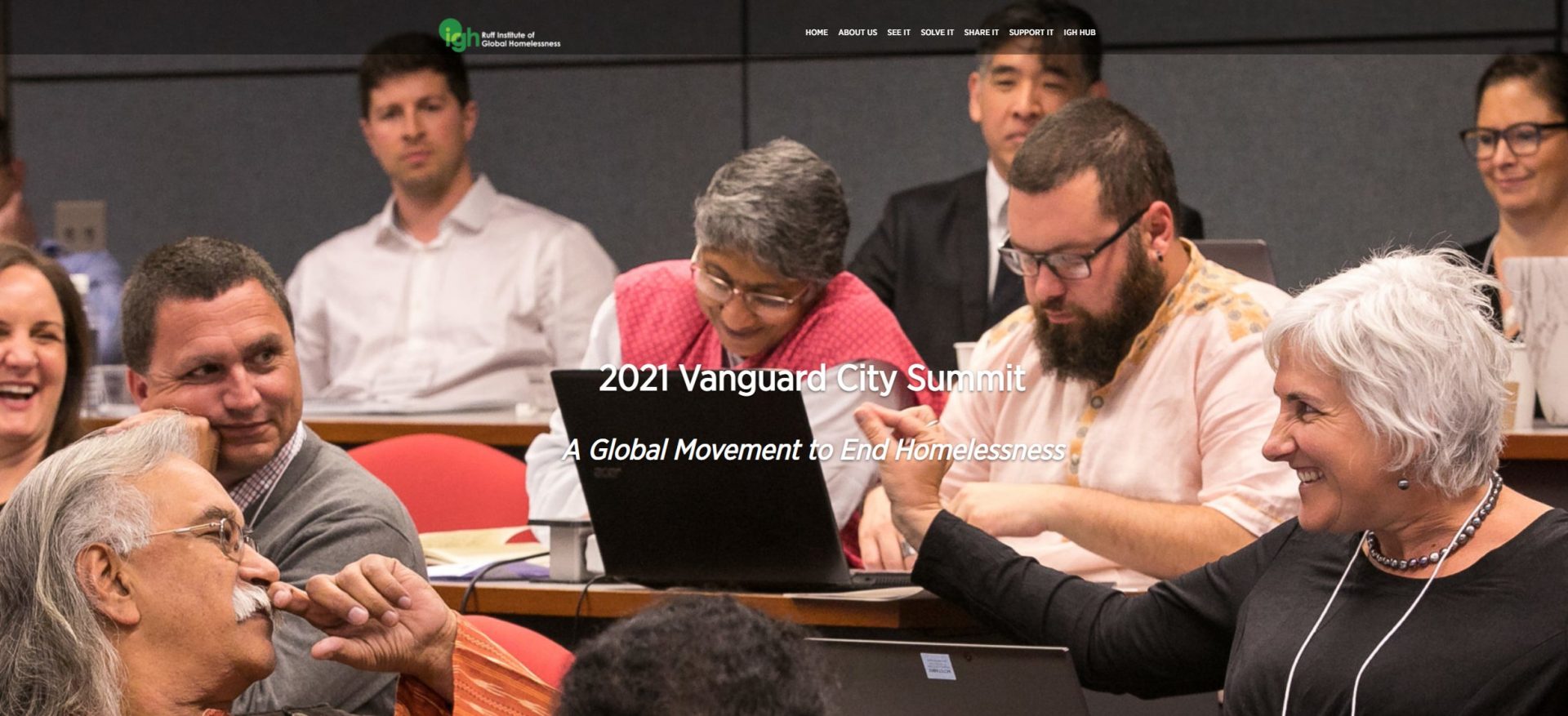
At our annual conference in 2018 Baroness Casey of Blackstock (at that time Dame Louise Casey) announced that Glasgow would take a leading role in a new global programme to end street homelessness by 2030. The ‘A Place to Call Home’ initiative is led by the Institute of Global Homelessness (IGH) based in Chicago, which Baroness Casey chairs.
Eventually drawing in 150 global cities, the starting point was pioneering work undertaken by a small group of 12 Vanguard Cities working to achieve specific targets by 2020. Glasgow was part of that group with a target to reduce by 75 per cent the number of people sleeping rough every week in the city centre and cut by 50 per cent those sleeping rough across Glasgow each year.
Along with Sydney in Australia, Glasgow has fully met its targets. The COVID-19 pandemic had varying effects on the Vanguard Cities and in several areas the pandemic presented an opportunity to point significant resources towards effectively ending and preventing homelessness in the short-term through the use of hotel rooms, eviction moratoria and enhanced financial support. In Scotland, both Glasgow and Edinburgh used the opportunity to end the use of communal shelters altogether.
Among the success factors identified by the IGH is Housing First and the wraparound support that accompanies it. Other significant positives include rapid access to settled housing and, where that is not available immediately, a decent emergency accommodation offer. Assertive street outreach services were also important along with access to mental health support.
More information at the Institute for Global Homelessness here.
Webinar launches Scotland’s new national Housing First ‘Check Up’
An online event for local authorities and partners on Thursday 25 November will set out plans for a new ‘Check Up’ process that will support the rollout of Housing First in Scotland. Activity will be co-ordinated by a nationwide policy and practice network supported by a strategic partnership between Homeless Network Scotland and the Scottish Government.
Housing First provides ordinary, settled housing as a first response for people whose homelessness is made harder by experiences such as trauma, addiction and mental ill health.Scotland is the first part of the UK to move ahead with a national rollout, with local authorities at the spearhead of this transformation.
Branching Out, The National Framework for organisations and sectors starting up or scaling up Housing First in Scotland, has been updated ahead of the webinar to reflect the latest research and data.
Maggie Brünjes, Chief Executive of Homeless Network Scotland, said:
“The Scottish Government has committed to scale up Housing First and all councils in Scotland have local plans on how Housing First will be implemented in their area.
“However, there’s doing something and there’s doing the right thing, at the right time and in the right place. We know that local authorities are naturally reflective and already committed to the Housing First approach. The new annual check-up process builds on this strong foundation with additional support and advice, safeguarding the elements that make Housing First work.”
Updates to the 100-page National Framework, endorsed by the Scottish Government, SFHA, CIH and Wheatley Group among others, link into the Prevention Review Group report, Shared Spaces research into shared and supported accommodation and the Housing First Interim Evaluation Report delivered by I-SPHERE at Heriot-Watt University. The Framework is a ‘how to and why’ guide to planning, commissioning and delivering the approach locally and nationally covering community justice, housing and social care issues as well as local and national government.
Growing evidence from across Scotland and the rest of the UK supports the delivery of Housing First for specific groups in addition to the wider group of people with the sharpest experiences of homelessness. For example, the Rock Trust and Almond Housing Association have tested Housing First for young people leaving care in West Lothian and their evaluation shows that:
- All but one young person has continued to sustain their tenancy.
- All young people described ways in which their relationship with their Housing First worker had led to positive changes in their life.
- Some young people reported improvements in mental health and satisfaction with life, healthy eating and exercise, and some reported fewer problems as a result of substance misuse.
The Housing First Check Up webinar for Local Authorities and Partners takes place on Thursday 25 November 2021 from 10am to 12.00pm on the MS Teams platform. The event will be hosted by Sir Andrew Cubie and Marion Gibbs, Team Leader – Homelessness, with the Scottish Government. Book a place here.