The Everyone Home Collective and the Coalition of Care and Support Providers in Scotland (CCPS) have jointly issued a position paper calling on the Scottish Government to integrate housing equality and strategic support into More Homes Scotland, the national housing agency announced by the First Minister John Swinney in January 2026. This arrives ahead of an anticipated parliamentary update this month on the agency’s co-design phase.
Titled Toward A Fairer National Housing Agency, the paper is grounded in the persistent inequalities of Scotland’s housing system, where structural barriers mean that for many people, access to a settled, suitable and affordable home is still determined by who you are, where you’re from and what you earn.
It emphasises that housing inequality drives economic instability, public health disparities, and social exclusion – and manifests in systems with both housing surpluses and deficits. Consequently, increasing supply alone will not resolve the housing emergency without proactive, strategic interventions that account for support needs, inclusive housing options, affordability, quality and access.
“More homes alone aren’t enough to end housing inequality – experience has proven that,” said Maggie Brunjes, chief executive of Homeless Network Scotland, who convene the Everyone Home collective. “Our joint submission brings together frontline, research and policy expertise to make More Homes Scotland a keystone for real change and to ensure Scotland’s housing recovery leaves no one behind.”
Drawing on direct experience supporting those at the sharp end of Scotland’s housing and homelessness challenges, the paper advocates for housing equality as a core mission and outlines five recommendations to build on the housing support duty, embed a whole-system approach, deploy grant capital strategically to attract larger-scale social investment and establish a publicly accountable outcomes framework that is co-designed with people and communities who have experienced housing insecurity and inequality.
The full paper is available here with further details on the Everyone Home Collective and CCPS. The groups stand ready to collaborate with policymakers and stakeholders during the ongoing co-design phase of More Homes Scotland.
Scotland has some of the strongest homelessness rights in the world, but those rights are being fatally undermined by chronic underfunding and a persistent failure to deliver social homes at the scale required. Legislation cannot house people. Only investment can do that – and the forthcoming Scottish budget is an opportunity to make that happen.
Behind those figures sit the realities that shape lives for decades: disrupted education, worsening health, exhausted parents and children denied the stability every one of them deserves.
These are not inevitable outcomes. They are the consequence of political choices that the Scottish government now has the power to change.
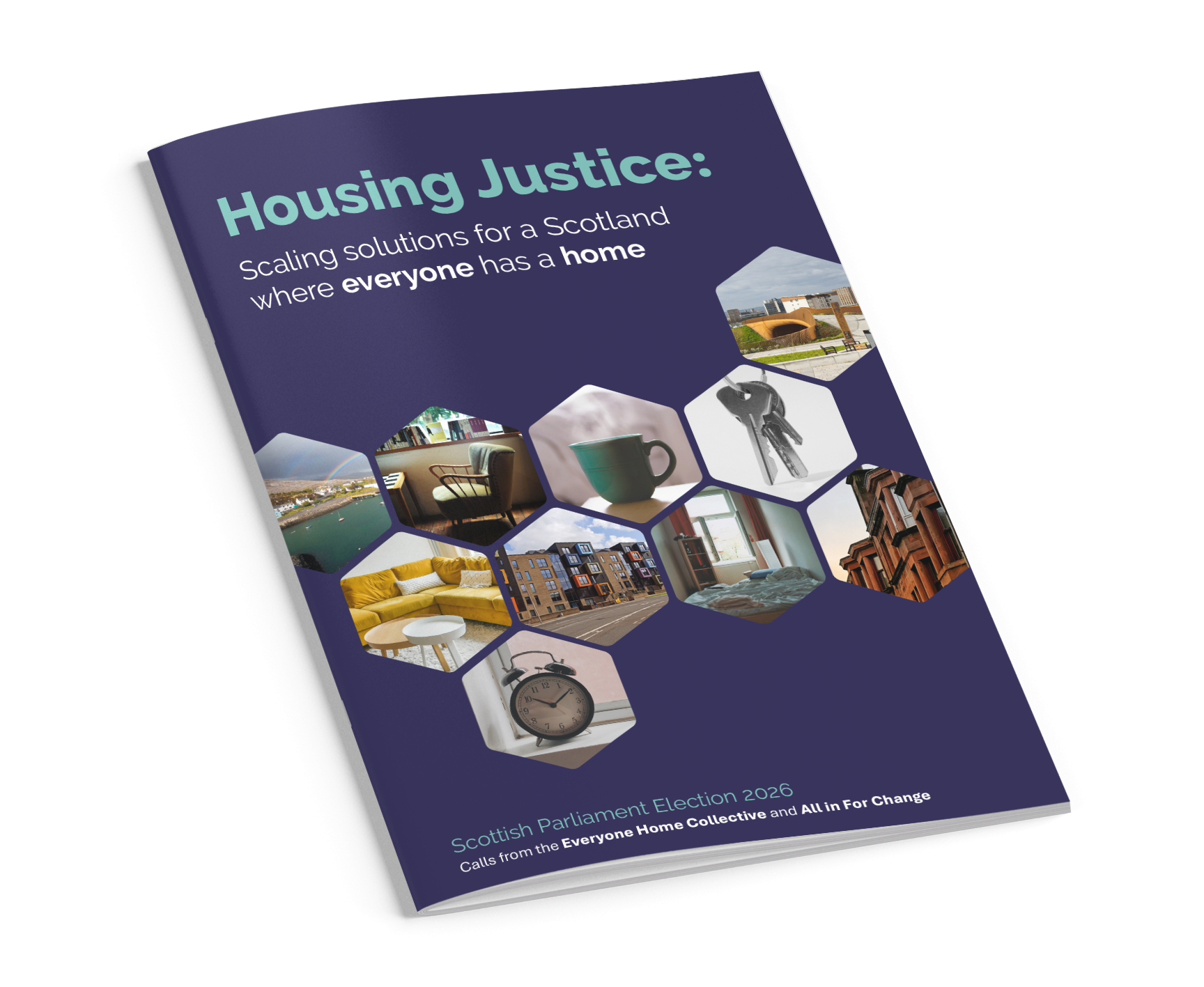
The Everyone Home Collective and All in for Change organisations have set out an election manifesto grounded in lived experience, frontline expertise and rigorous evidence: Housing Justice: scaling solutions for a Scotland where everyone has a home. Its message for the Scottish budget is clear.
Scotland needs a Big Build. We need at least 15,693 new social homes every year of the next parliament, backed by £8.8 billion of capital investment, according to independent research commissioned by the Scottish Federation of Housing Associations, CIH Scotland and Shelter Scotland.
Some in Holyrood claim this scale isn’t logistically possible. We disagree. Yes, challenges exist – but they’re not fixed. Today’s delivery rates – more than 7,000 affordable homes last year – are held back by limited funding and short-term priorities.
Put the full investment on the table with genuine urgency and the building industry, housing associations, planners and supply chains will step up. We’ve seen it before: when Scotland commits with ambition and resources, capacity grows to meet the moment.
This scale is not aspirational. It is the minimum required to reduce the housing need currently affecting 693,000 households, and to relieve pressure on a system spending millions on unsuitable temporary accommodation – hotel and B&B rooms – that leaves individuals and families in limbo. Without a step-change in housing supply, homelessness will continue to rise no matter how well-intentioned our policies are.
But supply is only part of the picture. Poverty, inequality and restrictive UK welfare policies remain the strongest and most persistent drivers of homelessness. When incomes fall short of the most basic cost of living and rents soar beyond reach, people fall into crisis long before they cross the threshold of a homelessness service.
Upstream prevention
That is why prevention must move upstream – and the budget must reflect this. Scotland’s new prevention duties offer real potential, but only if services across housing, health, social care, justice and policing are resourced to identify risk early.
Frontline workers are already stretched to breaking point. They cannot compensate indefinitely for failures elsewhere in the system. A budget committed to housing justice must ensure that the burden does not fall on those already doing the heaviest lifting.
Crucially, it must also shield those being hit hardest by the housing emergency: people experiencing deep poverty, discrimination, trauma and gender-based violence. Our manifesto calls for fast-track access to housing and support for people facing systemic disadvantage – a targeted approach backed by evidence, not rhetoric.
It also means confronting an uncomfortable truth: not everyone is at equal risk of homelessness, but the housing emergency now affects people who were previously considered secure. Soaring rents, a shrinking supply of affordable homes and rising living costs are pushing more people into instability.
Housing justice is a simple idea. When everyone has access to a decent home, everyone benefits. Individuals, families, children, communities, society, the economy. It is the foundation on which health improves, education stabilises, inequality narrows and communities thrive.
The January 2026 Scottish budget is a defining moment. If Scotland wants to be credible on homelessness, three decisions are essential.
Firstly, fund the Big Build at scale and across multiple years. Only long-term certainty will allow councils and housing partners to plan and deliver the homes people urgently need.
Secondly, invest in a coherent system of prevention. That means backing ‘Ask and Act’ so it works. This is a new legal duty in Scotland that requires a wide range of services outwith homelessness to ask about someone’s housing situation and, if necessary, take action to help prevent their homelessness. With proper training, delivery resources and joined-up working, Ask and Act can stop homelessness before it starts.
Lastly, spend smart on joined-up support. Those hit hardest by the housing emergency often face overlapping crises like trauma, addiction and mental health problems – yet public services are built to tackle just one issue at a time. Fixing this mismatch will prevent the worst harm to those worst off.
By investing in these priority areas, a Scottish budget with the idea of housing justice as its cornerstone can get us closer to creating a fairer country where everyone has a home.
People with lived experience of homelessness are uniting with dozens of leading organisations to demand urgent action on Scotland’s worsening housing crisis.
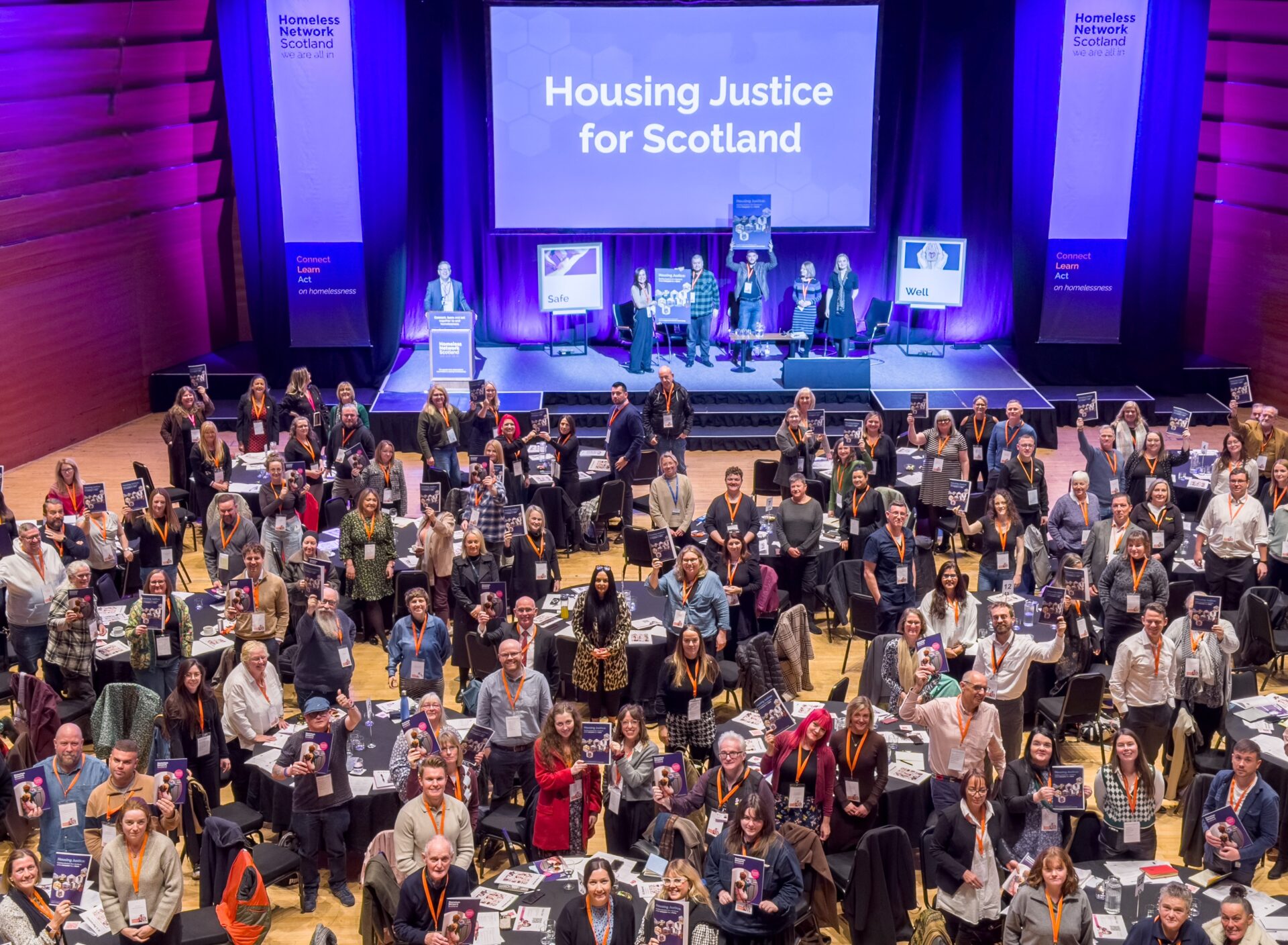
Their joint manifesto was launched at Scotland’s Annual Homelessness Conference, hosted by Homeless Network Scotland, on 27 and 28 October in Perth. It calls on all political parties to commit to a programme of housing justice that will ensure everyone in Scotland has a safe, secure place to call home.
The scale of the crisis has been laid bare in recent statistics, with more than 17,200 households currently trapped in temporary accommodation, a 6% increase in one year, including over 10,000 children.
Nearly 250,000 people are on waiting lists for a social home, and 40,688 households have applied to their local council for help with homelessness last year. On average, those in temporary accommodation wait 238 days for a settled home.
The call comes from members of Everyone Home, a collective of nearly 40 third and academic sector organisations focused on ending homelessness, and All In for Change, a platform that unites lived experience and practitioner insight of homelessness across Scotland to enable decision-makers to drive real change.
All in for Change said: “In the Change Team, we see every day how the housing emergency hurts people who are homeless and those trying to help them. Frontline workers do amazing work, but they’re trapped in a broken system with too little housing and support to fix it.
“Some of us have been homeless ourselves, so we know the reality first-hand. But we believe this can be made better for others, with real political commitment and funding being used more wisely. We’ve laid out clear expectations for party manifestos, and we’ll keep pushing to shield people from the worst of homelessness in this housing emergency.”
Set almost 18 months after Scotland’s housing emergency was formally declared, the manifesto outlines a practical, values-led approach to resolving a crisis that continues to deepen inequality and exclusion.
It sets out five priority actions for the next Scottish Government, under the banner of SCALE. It calls for the launch of a national ‘Big Build’ programme to dramatically increase the supply of social housing, with a target of nearly 16,000 new homes each year of the next parliament backed by at least £8.8bn.
The manifesto urges political leaders to coordinate support services more effectively, so that housing is fully integrated with health, social care and justice to ensure no-one falls through the cracks. It demands that public funding decisions align with housing priorities, including the use of tax powers and long-term investment plans that can give frontline workers and those they support greater certainty.
It insists that housing rights must be protected and fully resourced, warning that too many local authorities are currently struggling to meet their legal obligations. Finally, it calls for fast-track housing and support for groups facing systemic exclusion, including people affected by poverty, discrimination, trauma, gender-based violence and UK immigration policy.
Maggie Brünjes, chief executive, Homeless Network Scotland, said: “Scotland’s housing emergency is a plan gone wrong, driving homelessness and deepening inequality. To reverse this, we must invest in more social housing, higher incomes, proactive prevention and support that is fully integrated across health, housing, justice and social care.
“The Everyone Home collective manifesto is a plan to put that right and a call for Housing Justice. Combining first-hand, professional and academic insight, the manifesto outlines real-world measures to reduce inefficient spending, prevent the worst harm among the worst off, and scale solutions for a Scotland where everyone has a home.”
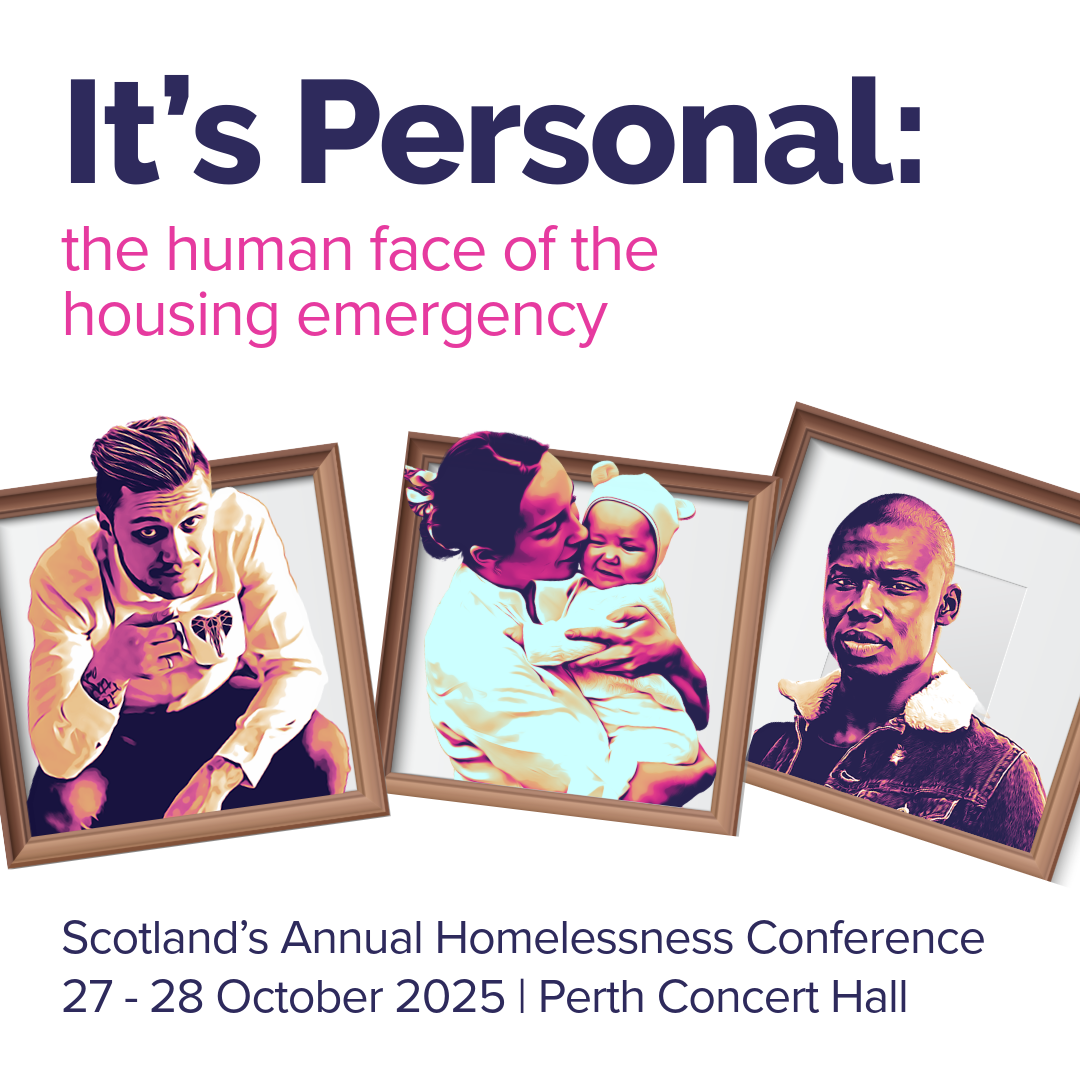
The manifesto launch will take place at Scotland’s Annual Homelessness Conference, this year titled ‘It’s Personal: the human face of the housing emergency’. The two-day event will shine a light on the real-world, human impact of the crisis, through people with lived experience, advocates and experts sharing knowledge and practical ideas to deliver lasting change.
Helen Murdoch, Asst. Director of Strategic Operations & Development (Scotland) at conference delivery partner The Salvation Army, said: “This year’s conference takes place in the shadow of a housing and homelessness crisis that tests our compassion, our resources and our collective resolve.
“The demand for services that support people experiencing homelessness is far outstripping supply – that must change and change quickly. Conference is an opportunity to explore our role in bringing about that change and The Salvation Army is proud to be an event partner.
“It is also a time to look beyond the headlines and statistics, to recognise and celebrate the extraordinary courage and resilience of teams working in communities, the third sector, local authorities and religious bodies to support people experiencing homelessness.”
Keynote speakers include Cabinet Secretary for Housing, Màiri McAllan MSP, who will address the event, renowned children’s rights campaigner and author Baroness Floella Benjamin, and rising social justice advocate Eireann McAuley, named one of the Young Women’s Movement’s ‘30 under 30′.
Baroness Floella Benjamin OM DBE said: “Having a safe and secure home is the key building block for living a happy and fulfilling life, yet today that basic human need is being denied to too many people. The impact on them is heartbreaking.
“All it takes is the grit, perseverance and determination to face the challenges and to keep on pushing for positive change. There is no shortage of people willing to fight this fight and I support all those who are working to change people’s lives.
“When I address Scotland’s annual homelessness conference I hope to energise and inspire the audience, to bring them joy amid the struggle. I want to remind people that even though it sometimes doesn’t feel like it, the work they do every day can and does change lives. So never give up.”
The launch marks the start of a national conversation aimed at ensuring housing and homelessness are top-tier priorities ahead of the 2026 election.
We use cookies to ensure that we give you the best experience on our website. If you continue to use this site we will assume that you are happy with it.
You can revoke your consent any time using the revoke consent button.